

While not as famous as Spitfire, Hurricane formed the backbone of Royal Air Force early in the war and was used throughout the conflict in all major theatres in various roles. It was designed in 1930s by Hawker and made its maiden flight in 1935. Pilots praised the fighter as being simple to fly and characteristics were great for the time. Development of the aircraft also went hand in hand with the development of the famous Rolls Royce Merlin engine. The aircraft was also cheaper and simpler to build than the more advanced Spitfire and RAF ordered hundreds of them, with the war looming over the horizon. To increase the speed of production, first Hurricanes were equipped with fabric covered wings but switched to metal wings in 1939. By the outbreak of the WW2, over 500 of the initial 600 ordered were built, with 3500 more on order. Eventually more than 14.000 Hurricanes were built and operated by 25 countries all around the world.
Hurricane Mk.IIc replaced its armament of 8 machine guns with 4 20 mm Hispano Mk.II cannons while underwing hardpoints were later addition, that enabled them to carry fuel tanks and bombs. Not matching the period German fighters, it was quickly relegated to ground attack duties, earning it a “Hurribomber” nickname. 4.751 were built between February 1941 and July 1944.
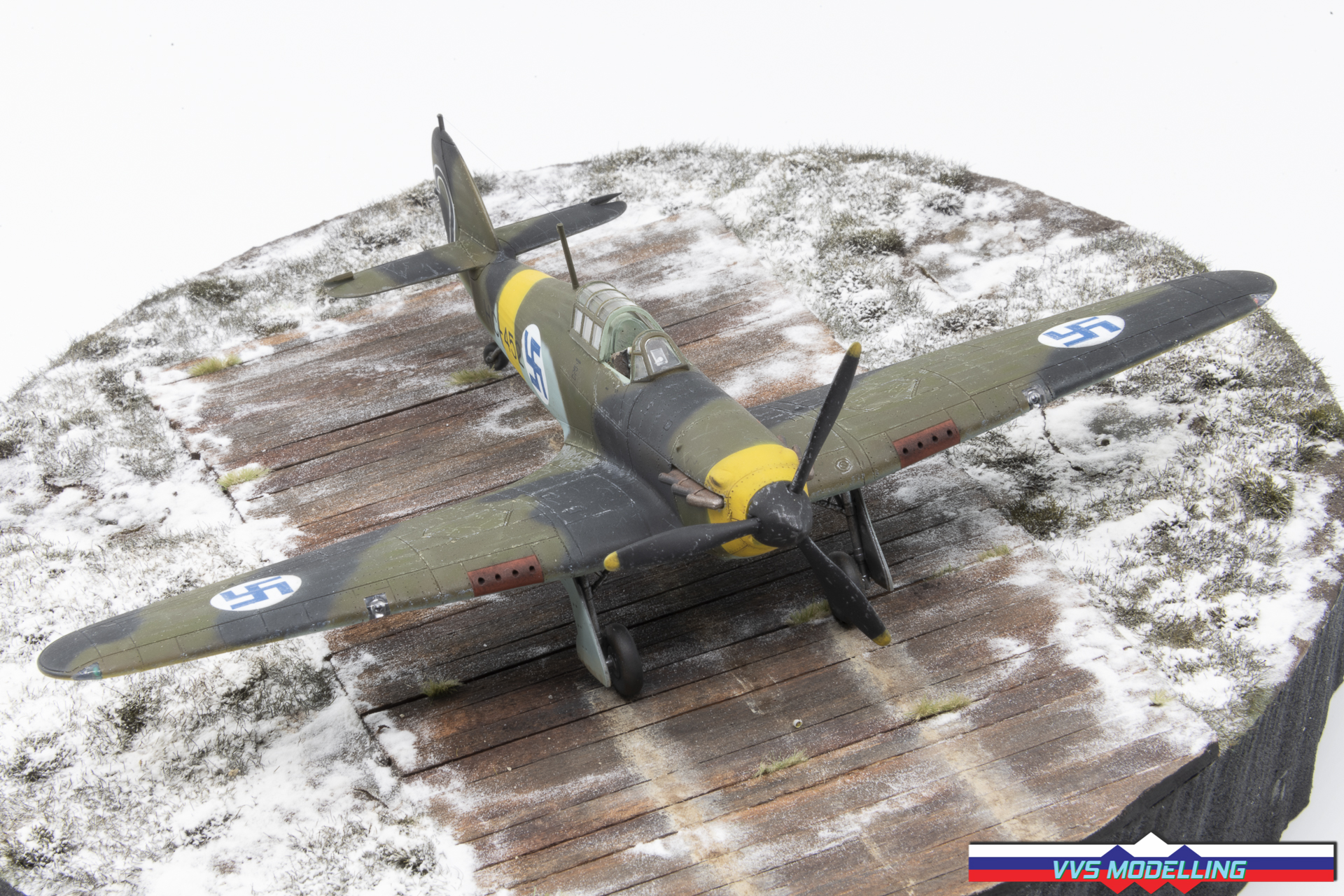
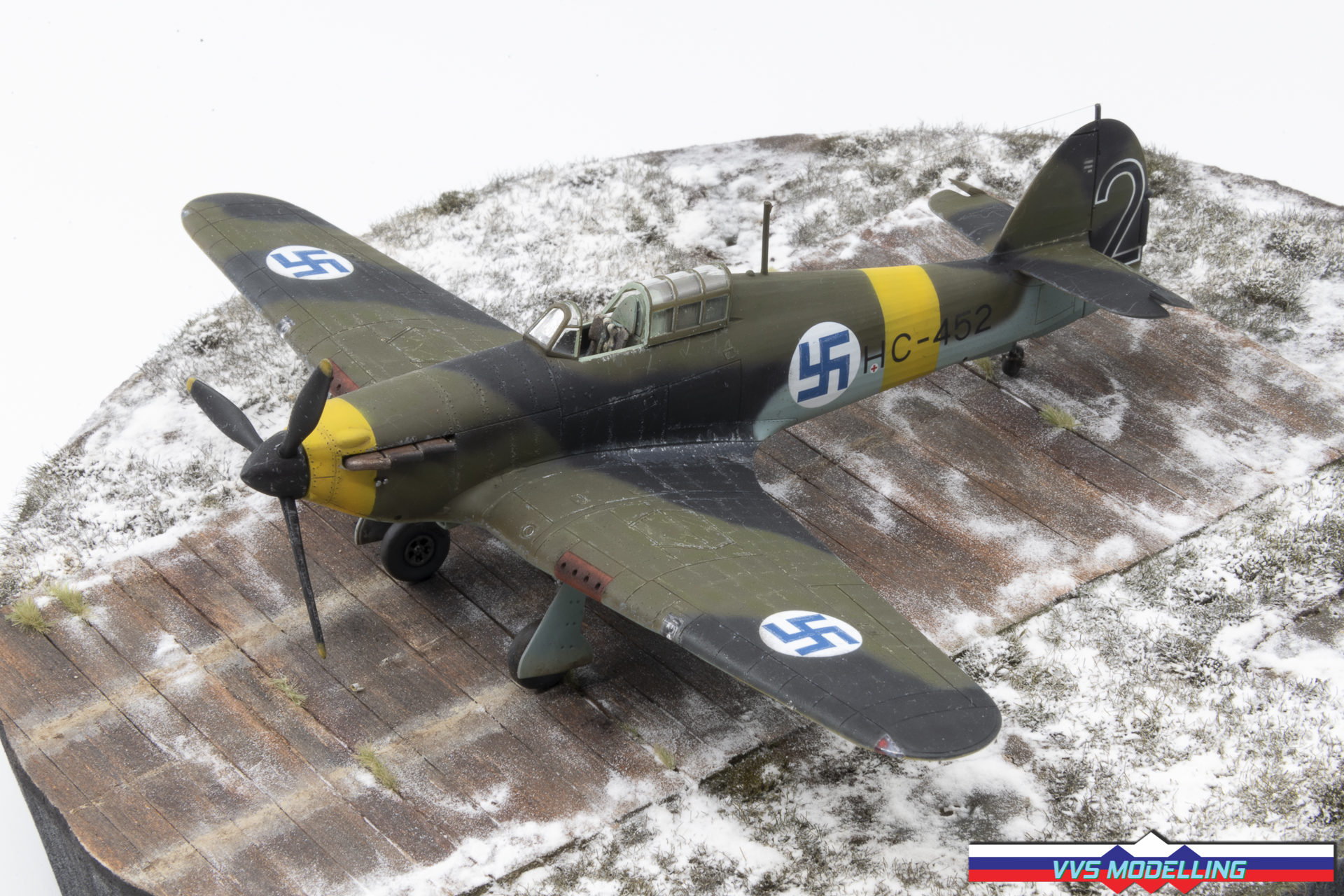
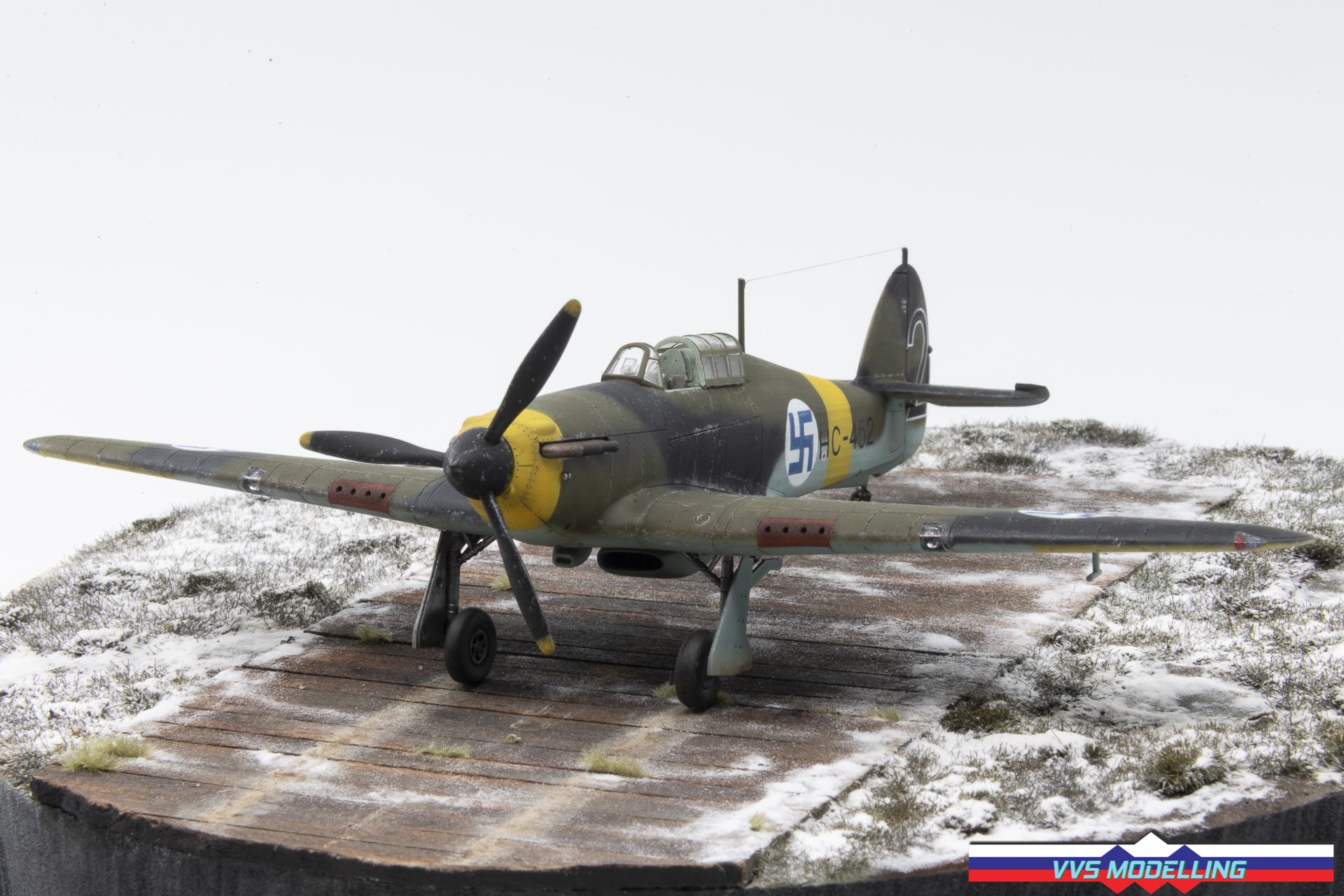
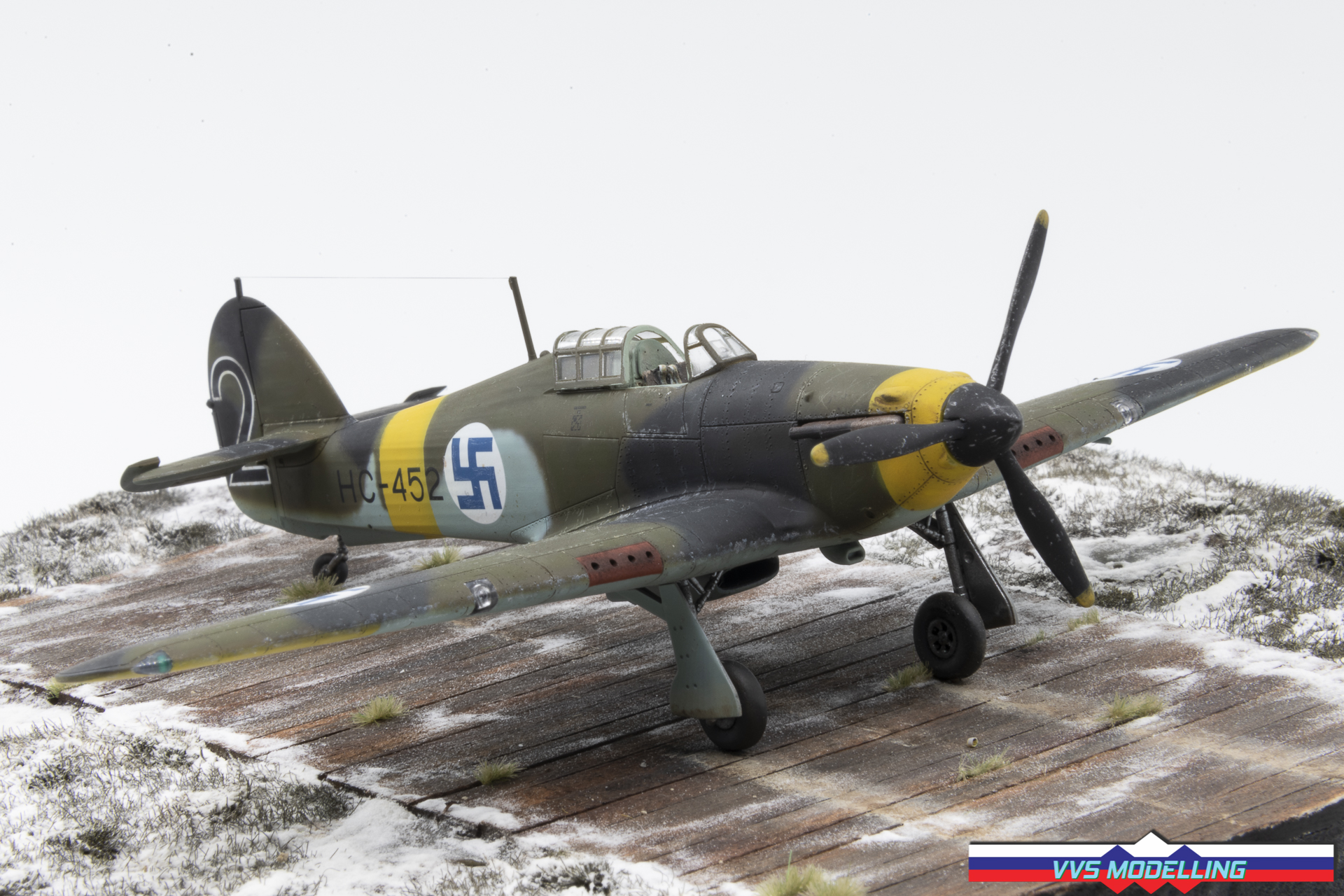
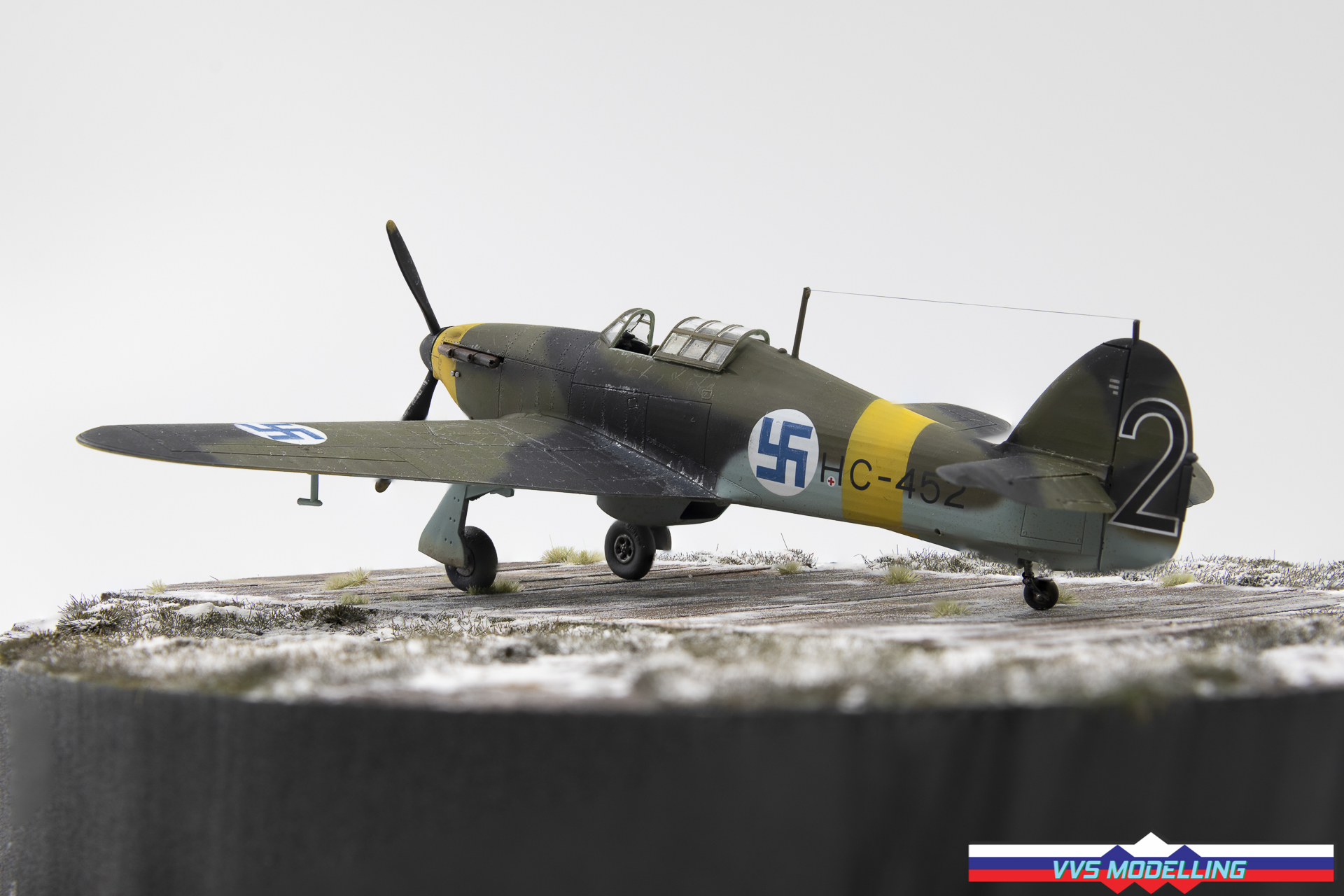
Winter War broke out on 30.11.1939 and Finnish Air Force was in a dire need of new equippment, especially fighters to defend against Soviet attacks. Negotiations with the British were concluded in early February for the acquisition of 12 RAF Hurricanes to be delivered in two batches. The aircraft were flown via Scotland and Norway in March 1940 and two aircraft were lost enroute. They arrived too late to see action in the Winter War but they soldiered on into Continuation War and were credited with the destruction of 4 I-153 fighters, 1 SB bomber and shared a kill of I-15bis fighter. Despite being obsolete at the beginning of Continuation war, due to the fighters shortage, they soldiered on until 1943. In 1942, a Soviet land-lease Hurricane Mk.IIa crash landed in Finnish territory and was repaired and brought to service with the help of spare parts from other crashed Soviet Hurricanes as a 13th aircraft. All but one were scrapped by 1950, the sole survivor being on the display at Central Aviation museum at Tikkakoski near Jyväskylä. Through the career one of the Hurricanes was lost with the pilot to enemy fire, three were lost to fatal crashes and two more were damaged by enemy fire but landed safely.
TRIVIA: When I first heard of Finnish Hurricanes many moons ago, it was a wide spread knowledge, that delivered aircraft were so called rag-winged Hurris – of the initial batch with canvas wings. Through my research I discovered that this information is at least only partially true. I have not found any historic photos of the rag-wing Finnish Hurricane online, yet I found photos of HU-460, HC-458, HC-453 and the sole survivor, which I had a pleasure to see in person in Finland, HC-452, with all of them having metal wings.
The kit
There’s not much to say about this kit except if you wanna build 1:72 (or 1:48 for that matter), grab yourself an Arma Hobby kit!
The good:
– good fit
– good surface details
– nice decal sheet
– nicely detailed cockpit
– inclusion of resin 5-spoke wheels correct for this version
The bad:
– lack of rivet details
– additional seat armour not included
Link to the in-progress article: https://vvsmodelling.com/2024/09/18/arma-hobby-172-hawker-hurricane-build-article/
Model Data
Company: Arma Hobby / 70025
Scale: 1:72
Aftermarket: /
Decals: kit decals
Paints used: Mr.Paint
Camouflage: MRP-051 RLM04 Gelb, MRP-067 RLM78 Hellblau, MRP-077 NATO Black, MRP-169 Light Khaki,
Metallics: MRP-147 Burnt Iron,







 VVS modelling
Congratulations on an outstanding model, and your base is also superb!
Thank you very much, Jeff!